
Common Currency Mistakes Travelers Make When Vacationing in Grenada (And How to Avoid Them)
Planning a vacation to Grenada usually starts with beaches, waterfalls, local food, Carnival, or finding the perfect vacation rental. Currency planning rarely gets much attention until travelers suddenly find themselves standing at a roadside fruit stall, trying to pay for a bus ride, or realizing the “easy” ATM withdrawal costs far more than expected. While Grenada is one of the friendliest and easiest Caribbean islands to visit, many visitors still make avoidable money mistakes that quietly increase travel costs.
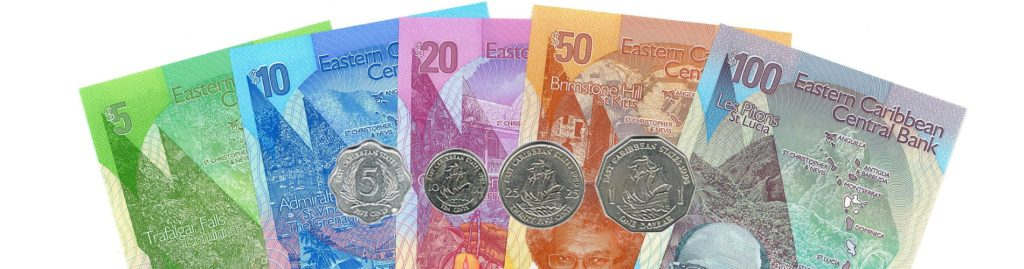
Grenada uses the Eastern Caribbean Dollar (EC$ / XCD), though U.S. dollars are widely accepted throughout much of the island. The catch is that many travelers assume this means they do not need a money strategy. That assumption often leads to poor exchange rates, unnecessary ATM charges, overspending, and leftover currency sitting unused in a drawer back home. The good news is that most of these mistakes are easy to avoid with a little preparation.
1. Relying Only on Credit or Debit Cards
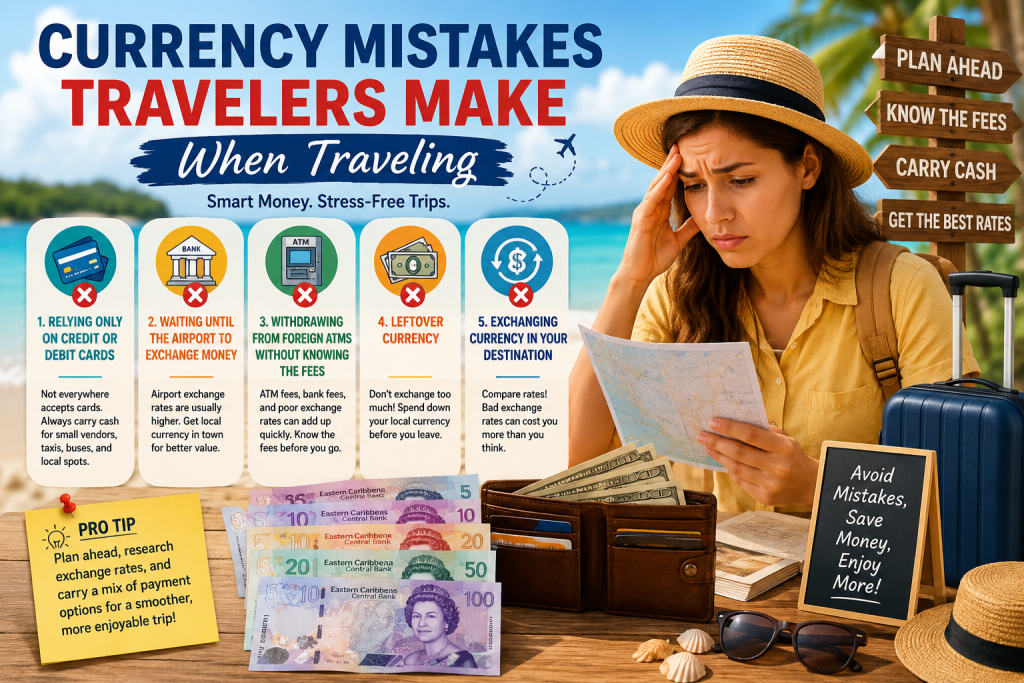
One of the biggest mistakes visitors make in Grenada is assuming cards work everywhere. Yes, major hotels, restaurants, grocery stores, resorts, car rental agencies, and larger businesses generally accept Visa and Mastercard. But Grenada still runs heavily on cash, especially once you move beyond tourist-heavy areas. Local food vendors, roadside fruit sellers, minibuses, fishing villages, market stalls, small bakeries, rum shops, and many neighborhood businesses often prefer cash or accept cash only.
This catches travelers off guard more often than you might expect. You may spend the day exploring places like Concord Falls, a local fish fry in Gouyave, or hopping on the #7 bus through Tempe and Mt. Parnassus, only to realize your card is useless for smaller purchases. Even taxi drivers sometimes strongly prefer cash, and agreeing on fares in EC dollars helps avoid confusion or inflated exchange calculations.
How to avoid it: Bring a mix of payment methods. Use cards for larger expenses such as accommodations and dining, but always keep a reasonable amount of Eastern Caribbean dollars (EC$) for everyday spending. Think buses, snacks, tips, beach vendors, local groceries, and hidden local experiences.
2. Waiting Until the Airport to Exchange Money
Many travelers land in Grenada expecting to exchange money at the airport, only to discover they either receive a poor exchange rate or find limited options depending on timing and availability. Some airport exchange services exist, but airport currency conversion is rarely the most economical choice. Even when convenient, airport exchanges tend to favor speed over value.
A common mistake is arriving with no local cash at all, then immediately needing money for transport, food, or tips. Travelers often exchange larger amounts at poor rates simply because they feel stuck. Meanwhile, locals and experienced repeat visitors usually withdraw smaller amounts through local bank ATMs or exchange strategically once in town. Reddit travelers and Grenada forum discussions frequently recommend avoiding large airport exchanges and instead using local banking options.
How to avoid it: Bring a small amount of emergency cash (either USD or EC dollars) before arrival. Once settled, use a local ATM from recognized banks or exchange money in St. George’s if needed.
3. Withdrawing From Foreign ATMs Without Knowing the Fees
This mistake quietly drains vacation budgets. Many travelers assume ATM withdrawals are simple, only to discover later they paid a withdrawal fee, a foreign transaction fee, a conversion markup, and sometimes an extra bank surcharge, all on one transaction.
Grenada ATMs typically dispense Eastern Caribbean dollars, but your home bank may charge international ATM fees or currency conversion fees. Some ATMs also present an option to charge your account in your home currency instead of EC dollars, a practice known as Dynamic Currency Conversion (DCC). While it sounds helpful, it almost always costs more because the ATM provider chooses the exchange rate, not your bank.
This becomes expensive when travelers repeatedly withdraw small amounts. Five small ATM withdrawals can cost far more in fees than one planned withdrawal.
How to avoid it: Before traveling, check your bank’s international ATM policy. If offered a choice, always select “Charge in Eastern Caribbean Dollars (EC$)”, not your home currency. Withdraw larger amounts less frequently to minimize fees. Travelers often report better experiences using major banks such as Republic Bank or Grenada Co-operative Bank ATMs.
4. Leaving Grenada With Leftover Currency
Almost everyone does this at least once. After a fantastic trip, travelers return home with a wallet full of EC dollars that quietly ends up forgotten in a kitchen drawer.
The issue is simple: because the Eastern Caribbean Dollar is not commonly exchanged in many countries, leftover money may become inconvenient to convert later. Travelers often exchange too much “just to be safe,” then leave the island carrying far more currency than necessary.
How to avoid it: During the last few days of your vacation, start spending down your EC cash naturally. Use the remaining money for local meals, souvenirs, spices, snacks for the flight, or grocery items before departure. Grenada’s local markets, rum shops, and spice vendors make this surprisingly easy.
5. Exchanging Currency in Your Destination Without Comparing Rates
Another frequent mistake is exchanging money at the first available place without understanding how Grenada’s currency works. Grenada’s Eastern Caribbean Dollar is pegged to the U.S. dollar at approximately EC$2.70 to US$1, meaning rates are relatively stable. However, not every vendor uses the same practical conversion when accepting U.S. dollars. Some shops may round differently, especially smaller vendors or taxis, meaning travelers unintentionally pay more.
For example, while the official peg remains stable, many businesses convert casually at around EC$2.50 to EC$2.67 per US$1, especially for quick transactions. That difference may seem small, but over a longer stay it adds up. Visitors staying in vacation rentals, shopping locally, riding buses, and eating outside resort areas often benefit from carrying EC dollars rather than relying heavily on U.S. cash.
How to avoid it: If you plan to explore Grenada like a local, use Eastern Caribbean dollars for day-to-day spending. Keep a mental shortcut in mind: divide EC prices by roughly 2.7 to estimate the U.S. equivalent.
Our Final Thoughts
Grenada is one of the easiest Caribbean destinations for handling money, but small mistakes can quietly add unnecessary costs to an otherwise relaxing vacation. The smartest travelers do not rely entirely on cards, avoid poor exchange decisions at the airport, understand ATM fees before arriving, avoid carrying too much leftover cash, and learn the basics of the Eastern Caribbean dollar before landing.
The goal is not to overthink money while on vacation. It is to avoid frustration, spend smarter, and enjoy more of what makes Grenada memorable, whether that means beach bars in Grand Anse, roadside food in Gouyave, local buses through St. George’s, or hidden village experiences far from the typical tourist trail.