History & Heritage: Exploring the Grenada National Museum
A visit to the Grenada National Museum gives a fascinating glimpse into the island’s multifaceted past. Housed within a complex of centuries-old buildings at the crossroads of Monckton and Young Streets, the museum stands just steps from the Carenage and many central accommodations—making it a perfect cultural stop during your trip.
Early Beginnings: A 19th-Century Vision
Grenada’s oldest effort at a public museum dates back to Act No. CXLIII of 1847, which established a public library and museum within York House in St. George’s. When a dedicated public library was completed in 1882, the displays were relocated, though the exact timeline of their closure remains uncertain. By 1934, evidence reveals that financing had gone due to the absence of a curator—leaving the fate of the early objects undetermined.
Interest reappeared in the mid-20th century when historian Alistair Hughes produced his own show in Springs. His efforts, aided by activists Willie Redhead and expatriates Leon Wilder, David Merriman, and Jeanne Fisher, resulted to the foundation of the Grenada National Museum in 1976. Their plea to the Gairy government resulted in securing part of a state-acquired historic complex as the museum’s permanent home.
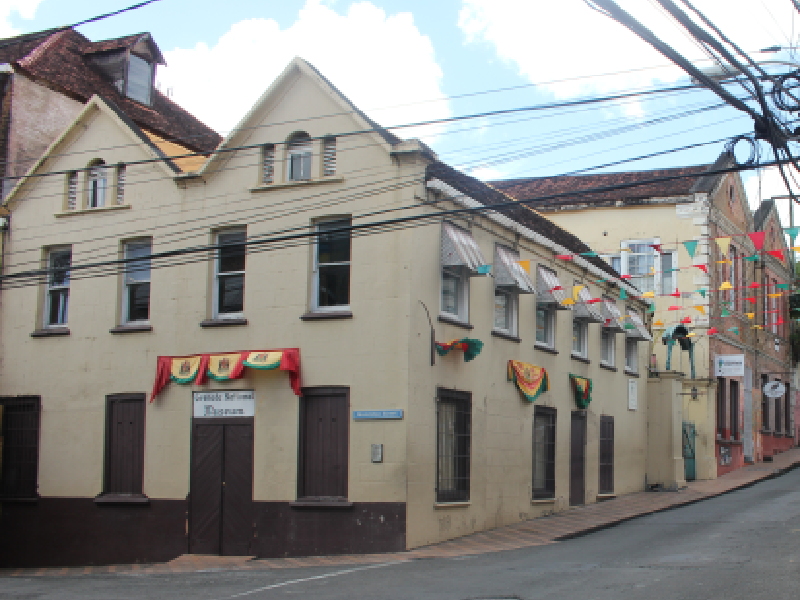
Grenada National Museum
The Home Hotel Era
The building presently constituting the center of the museum has roots in the mid-1700s, originally built as the British colonial Constabulary, an extension of the island’s Common Gaol. Contrary to popular assumption, the jail itself stood behind the modern structures, near what is now the Drill Yard and Sendall Tunnel.
Between 1850 and 1880, the property entered an altogether new phase. Sold and transformed as the Home Hotel, it offered upmarket lodging with around 30 rooms, an early predecessor to the hospitality alternatives presently found across St. George’s and the Grand Anse area.
From Hotel St. George to Antilles Hotel
By 1932, entrepreneur S.A. Francis acquired the site, expanded it, and rebranding it Hotel St. George. The new building on Young Street, today home to House of Chocolate at the ground level, was added during this period. Legend has it that Francis later lost the property in a card game to CFP Renwick, who renamed it the Antilles Hotel. After Renwick’s death in 1940, ownership returned to Francis, though the hotel gradually declined as tourism shifted toward Grand Anse.
One beloved part of the complex, Jeanne Fisher’s historic souvenir shop Tikal, operated from 1956 until 2012, serving generations of visitors.
Birth of the National Museum
Following years of neglect, the Gairy government repossessed the crumbling buildings, restoring the space for multiple government ministries and saving the ground floor for a new national museum. By 2003, the entire site was dedicated to museum use. The Museum Act of 2017 placed the institution under the Ministry of Culture, with a formal board overseeing its direction.
The Prison & Drill Yard: A Glimpse into Grenada’s Past
Behind the museum lies one of St. George’s most atmospheric historic zones: the former judicial court, prison, and Drill Yard, first built during the French period. The British expanded the facilities after 1763, and although male prisoners moved to Richmond Hill Prison in 1880 (women followed in 1904), the site remained active through World War I as a drill yard and rifle range.
Visitors can see the old buildings from Tricentennial Park, which has steps that lead to Fort George. Some parts of the complex were damaged by fire in 2011, but the ruins that are still standing are a strong reminder of the island’s colonial past.